A specialty vehicle in La Jolla needs a pickup plan built around that exact car. Clearance, wheel condition, steering, grade, and garage access can all change the approach.
Tow Pro SD connects owners with local towing professionals. The operator sets the price, plans the loading method, and performs the transport.
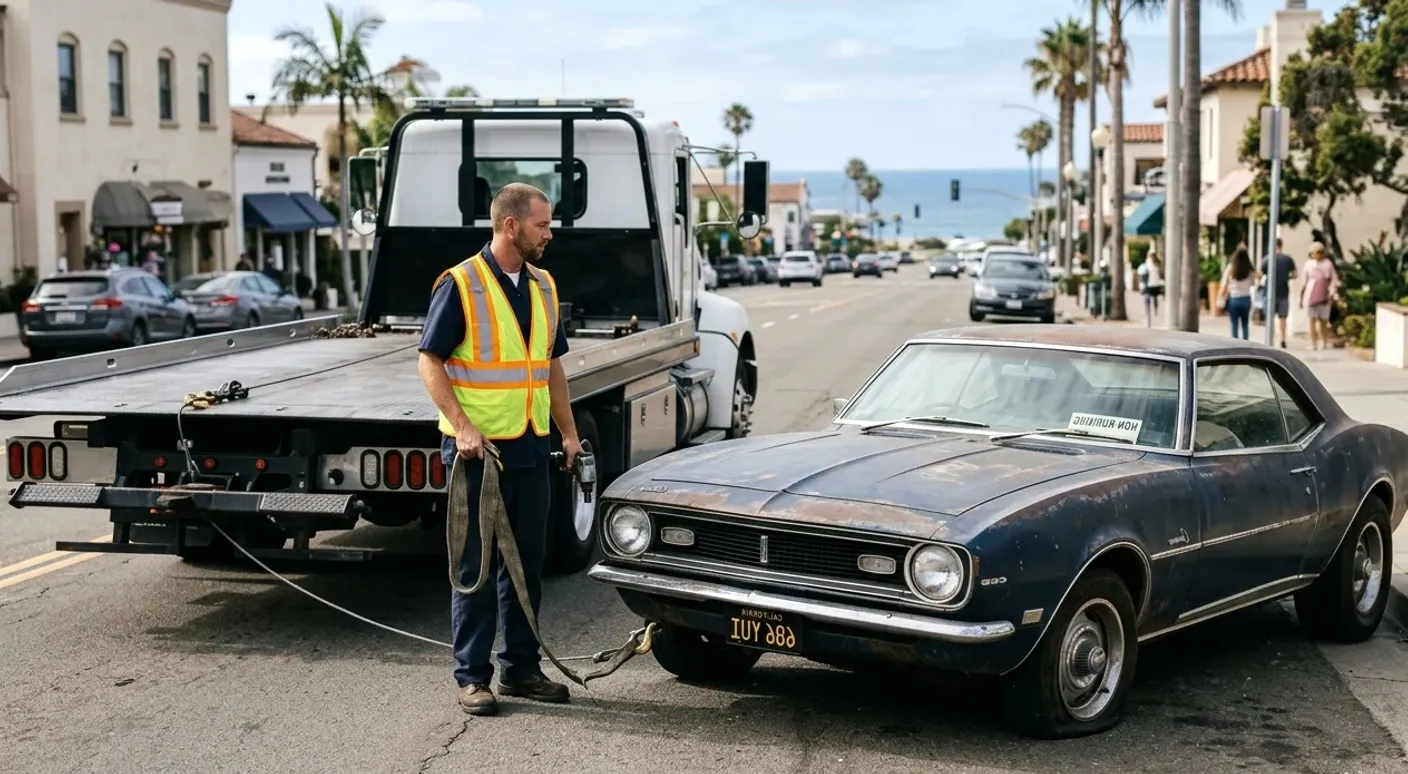
Describe the vehicle and its current condition
Start with the year, make, model, and drivetrain, if known. Say whether the vehicle is factory stock or modified. Don’t describe an exotic coupe as simply “a car.” That leaves out details the referred operator may need before accepting the job.
Explain why the vehicle needs transport. It may have a dead battery, collision damage, a flat tire, a mechanical problem, or no current registration. A running vehicle presents a different loading situation from one that can’t shift into neutral.
Mention any visible fluid, smoke, unusual odor, or body damage. Don’t touch damaged electrical components or try to diagnose a high-voltage system. For an electric or hybrid vehicle, give the exact model and describe any collision, water, or battery damage. Manufacturer recovery instructions vary.
Tell dispatch if the parking brake releases. Confirm whether the transmission shifts and whether the keys are available. If the car has a removable battery cutoff, unusual ignition sequence, or aftermarket security system, explain that too. Don’t bypass a system unless the vehicle manufacturer provides that procedure.
Classic vehicles may have unfamiliar controls or fragile trim. Exotic cars may have lifting systems, electronic parking brakes, or model-specific transport settings. None of those features should be assumed from the badge alone.
Our exotic and classic vehicle towing service helps match the vehicle’s condition with an appropriate local operator. Photos can also clarify visible damage, parking position, and the available approach.
Share ground clearance, wheel, and steering details
Low clearance affects more than the front bumper. Side skirts, splitters, exhaust components, underbody panels, and rear diffusers may sit close to the pavement. Share the lowest measured clearance if you can check it safely without crawling beneath the car.
Tell dispatch whether the suspension is stock, lowered, or adjustable. If the vehicle has a factory lift setting, identify the model and consult its manual. Don’t assume that setting can remain active during loading or transport.
Wheel and tire details matter too. Report any flat tire, broken wheel, missing wheel, locked brake, or damaged suspension corner. Large wheels and low-profile tires don’t confirm a towing method by themselves. Their condition helps the operator prepare a suitable loading plan.
Explain whether the front wheels turn. Say if the steering is locked, the keys are missing, or the car can’t enter neutral. A vehicle that won’t roll needs a different approach from one that moves freely.
A flatbed may be appropriate for many specialty vehicles, but it isn’t a universal rule. Manufacturer guidance controls. Tesla’s Model 3 instructions, for example, permit specific transport arrangements with all tires off the ground. Ford’s Mustang Mach-E guidance also discusses flatbed transport or wheel lifts with dollies. Those examples don’t establish a rule for other vehicles.
Read more about flatbed towing options. Give the operator your exact year, model, drivetrain, modifications, and damage before confirming the method.
Explain whether the pickup is on a grade or in a garage
The La Jolla pickup location matters as much as the vehicle. Give the exact address, nearest cross street, parking level, and the direction the car faces. Mention whether it’s curbside, in a driveway, behind a gate, or inside a residential or commercial garage.
Street-specific grade and access conditions weren’t confirmed for this article. Describe what’s present at your exact location instead. A photo taken from behind the vehicle can show the approach. Another photo from the side can show the grade and curb position.
For garage pickups, share the posted entrance height. Measure the lowest overhead point only if you can do so safely. Note tight corners, ramps, speed bumps, columns, low pipes, and gate controls. Tell dispatch whether a tow vehicle can enter, turn, and leave without backing through a blind area.
Also describe the path between the disabled car and the street. A low ceiling may prevent a full-size carrier from reaching the vehicle. A steep garage ramp may create clearance concerns during movement. The referred professional should decide how to handle those constraints.
Don’t push or roll a valuable vehicle down a grade without professional control. A locked wheel, failed brake, or sudden steering movement can make that unsafe.
If the vehicle is stopped beside moving traffic, stay somewhere protected when possible. The NHTSA roadside safety guidance recommends carrying basics such as a charged phone and flashlight. Share your precise location with dispatch and follow emergency personnel’s directions.
Ask how the referred pro plans the pickup
Before approving the job, ask the referred operator to explain the planned approach. The answer should account for the vehicle, its condition, its position, and the available space.
Ask which transport method the operator proposes. Then ask how the car will move from its parking position to the loading point. If it can’t roll, steer, or shift, make sure that limitation is part of the plan.
Discuss the intended contact points. Tell the operator about carbon-fiber panels, aftermarket splitters, side exhausts, air suspension, or known weak trim. The operator should consult vehicle-specific recovery information when those details affect loading.
If the owner’s manual is available, check its towing or transport section. Provide the exact model year because instructions can change between versions. Don’t substitute guidance from a similar-looking model.
Ask these practical questions before work begins:
- How will the vehicle leave its current position?
- What equipment does the operator plan to use?
- How will locked or damaged wheels be handled?
- Does the pickup space allow the planned approach?
- What information is still needed from the owner?
- Who sets the final price and payment terms?
The independent operator sets the price and is paid directly by the customer. Confirm the total terms with that operator before authorizing the move. Tow Pro SD doesn’t publish a rate for specialty pickups.
The transport decision should follow the vehicle manual and actual access conditions. No single towing setup is correct for every classic, luxury, or exotic car.
Confirm unloading access at the destination
A careful pickup plan can still fail if the destination can’t receive the vehicle. Give dispatch the complete destination address before the operator heads out. Explain whether it’s a residence, repair facility, storage site, dealership, or event location.
Confirm that someone can authorize entry. Ask the destination whether gates, loading areas, or indoor spaces will be accessible. Don’t assume a repair shop can accept an unattended vehicle after closing.
Describe the unloading surface. Note grades, narrow driveways, gravel, soft ground, sharp turns, or low garage entrances. Share the direction the car must face after unloading. If it can’t start or steer, explain where it needs to be placed and how much working space is available.
Check that the destination has room for the operator to approach and leave. A driveway may fit the car but not the towing vehicle. Parked cars, landscaping, security gates, and loading-zone restrictions may narrow the usable area.
If delivery involves a garage, provide the entrance height and interior turning space. The operator should decide whether unloading outside is necessary. Don’t direct the driver into a space that hasn’t been assessed.
Tell both parties about keys, access codes, owner authorization, and the receiving contact. For a valuable vehicle, photograph its visible condition before pickup and after delivery. Keep those images with the transport paperwork.
These details help the referred pro plan the complete move, not just the first loading step. They also reduce last-minute changes when the vehicle reaches its destination.
When to call us
Call when a classic, luxury, lowered, or exotic vehicle needs professional transport instead of a DIY push or improvised recovery. Tow Pro SD connects you with local licensed and insured operators, while the referred operator plans the work and sets the price. Call (858) 925-5546 to reach dispatch.