Your fuel gauge is empty, and the car has stopped. Fuel delivery may fit when the vehicle is safely parked and needs only gas. A tow makes more sense when the location is dangerous, the fuel type is uncertain, or the car still won’t start.
Share your location before arranging help
Start by telling someone where you are. Send your live location or the nearest visible address to a trusted contact. Then give the dispatcher enough detail to find the correct side of the road.
A street name alone may not be enough in San Diego. State your direction of travel and the nearest exit when you’re on I-5, I-8, I-15, or SR-94. Mention a cross street, business entrance, parking level, or recognizable landmark when you’re off the freeway.
Details such as “northbound I-15 near the Friars Road exit” are more useful than “near Mission Valley.” In Downtown San Diego, identify the block and side of the street. In areas such as Mira Mesa or Kearny Mesa, include the shopping center or business name. Large parking areas can have several entrances.
Don’t walk alongside moving traffic to search for a marker. Share only what you can see from a safer position. If the vehicle creates an immediate roadway hazard, contact emergency authorities before arranging ordinary roadside service.
Drivers stranded on a San Diego freeway can also call 511 and say “Roadside Assistance.” The Freeway Service Patrol is operated by SANDAG with Caltrans and the California Highway Patrol. During its published operating hours, free help on patrolled segments can include one gallon of gas. Availability depends on the location, schedule, and day, so confirm it through 511.
When fuel delivery may fit
Fuel delivery may be the simplest option when the car is safely stopped and you know it ran out of gas. This often means a legal parking space, driveway, parking structure, or lot away from moving vehicles.
Tell the dispatcher which fuel the vehicle requires. Don’t guess. Check the fuel door, owner’s manual, or vehicle information if you’re uncertain. Give the exact year, make, and model. The operator can then decide whether the requested service fits the vehicle and location.
A roadside assistance referral may help when the problem appears limited to an empty tank. Fuel delivery is different from bringing a full tank. The goal is to supply enough fuel for the immediate situation, subject to what the operator offers and can safely provide.
Confirm fuel availability before accepting the job. Also ask whether the quoted amount covers the service call, fuel, and any access issue. Parking garages, gated communities, secured lots, and underground levels can affect how the operator reaches the car.
Don’t arrange ordinary fuel delivery when you smell fuel, see leaking liquid, notice smoke, or suspect collision damage. Move away from the vehicle if you can do so without entering traffic, then contact emergency authorities. Fuel delivery isn’t the right service for a possible fire, spill, or crash scene.
When the vehicle may need a tow instead
Running out of gas doesn’t always end with a successful restart. The vehicle may have another problem, or the original diagnosis may be wrong. If fuel is added and the engine still won’t run, ask about towing instead of arranging repeated service calls.
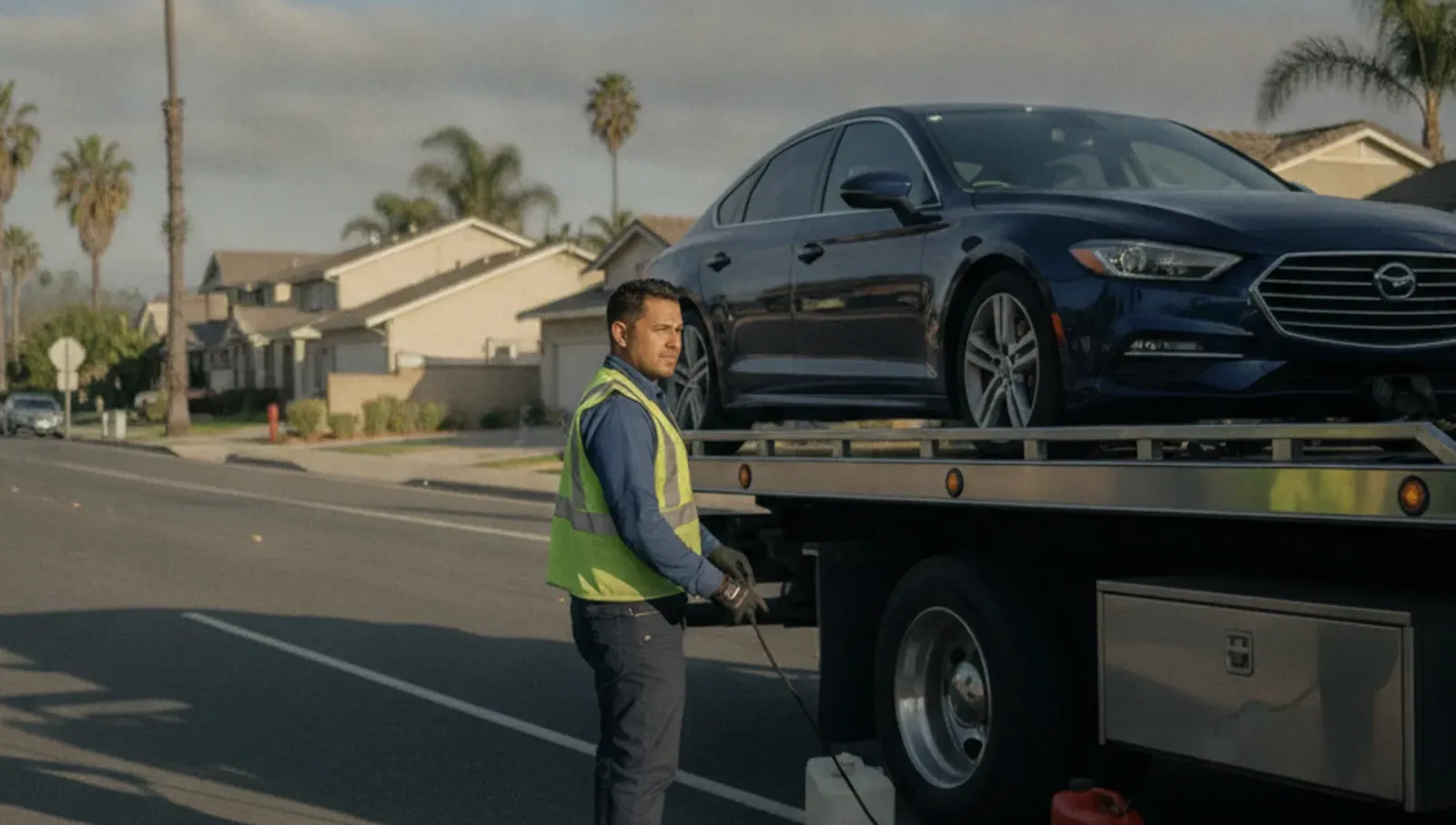
A tow may also fit when the vehicle is exposed to traffic. That includes narrow shoulders, active travel lanes, blind curves, and locations where waiting beside the car isn’t safe. Emergency authorities control immediate roadway hazards. A roadside operator shouldn’t replace emergency traffic control.
Choose emergency towing when the vehicle needs transport rather than a small roadside service. Tow Pro SD connects callers with independent licensed operators. The operator sent out performs the work, sets the price, and receives payment directly.
Tell dispatch if the vehicle has collision damage, locked steering, damaged wheels, low clearance, or missing keys. Also identify an electric vehicle by its exact year and model. Manufacturer transport procedures differ, so the operator needs accurate details before selecting equipment.
Don’t assume that every stalled vehicle should be taken to the nearest gas station. A repair shop, dealership, home, or another lawful destination may be more suitable. Confirm that the destination can receive the vehicle before transport begins.
Our broader San Diego towing service guide explains how local conditions affect the information operators need. Coastal routes, central San Diego, East County, and the South Bay can present different access and destination choices.
What to tell the roadside dispatcher
A clear first call helps the dispatcher match the problem with the right operator. Begin with your exact location and whether the vehicle is exposed to traffic. Then describe what happened without trying to diagnose an unfamiliar mechanical problem.
Provide these details:
- Your direction of travel, nearest exit, cross street, or parking entrance
- The vehicle’s year, make, model, color, and fuel type
- Whether the engine stopped while driving or wouldn’t start after parking
- What the dashboard showed before the vehicle stopped
- Whether fuel has already been added
- Whether the car restarts, cranks, or remains completely unresponsive
- Any collision damage, leaking liquid, smoke, unusual odor, or damaged tire
- Access limits, including gates, low garage ceilings, or parking levels
- Your preferred destination if towing becomes necessary
Stay factual. “The engine stopped and the fuel gauge reads empty” is more helpful than declaring that the fuel pump failed. The operator can decide what service is appropriate from the available information.
Tell the dispatcher immediately if you’re in an active lane or another dangerous position. For immediate roadway danger, contact emergency authorities first. The California Highway Patrol handles highway emergencies and traffic hazards within its jurisdiction.
You can also review NHTSA roadside safety information before your next trip. NHTSA recommends carrying a charged phone, water, a flashlight, and other emergency supplies. Those items won’t replace professional help, but they can make an unexpected wait more manageable.
Confirm the current quote and destination
Tow Pro SD doesn’t publish a fixed fuel-delivery or towing price. Independent operators set their own prices based on the requested job. Ask for the current quote before authorizing service.
State whether you’re requesting fuel delivery, roadside assistance, or a tow. Ask what the quote includes and what could change it. Fuel, mileage, vehicle condition, access, equipment, and destination can affect the final amount. Don’t rely on an old online figure or a price quoted for another driver.
If towing may be needed, confirm the destination before the operator begins transport. Call the repair shop or dealership and check whether it can receive the vehicle. Ask where after-hours vehicles should be left if the business won’t be open.
Give the operator the full destination address. San Diego has repeated street names, neighboring cities, and businesses with multiple locations. A shop name without a city or ZIP code can point to the wrong place.
Also ask the operator taking the job for an arrival estimate based on your exact location. Tow Pro SD doesn’t publish a standard response window because conditions and operator locations vary. Freeway incidents, restricted parking structures, backcountry roads, and the Pendleton corridor don’t present the same access.
Before the vehicle moves, confirm the destination and current quote again. If the service changes from fuel delivery to towing, ask for the revised amount first. Keep the operator’s business information and your receipt after payment.
When to call us
Call when fuel delivery won’t solve the problem, the car still won’t start, or a professional towing operator needs to move it. Tow Pro SD connects callers throughout San Diego County with local pros, and the phone line takes calls day or night. Call (858) 925-5546 to reach dispatch.