Yes, your car can get towed for expired tags in California. Police may tow a vehicle from a public road when its registration has been expired for more than six months. That doesn’t mean every car with an old sticker can be removed from every location.
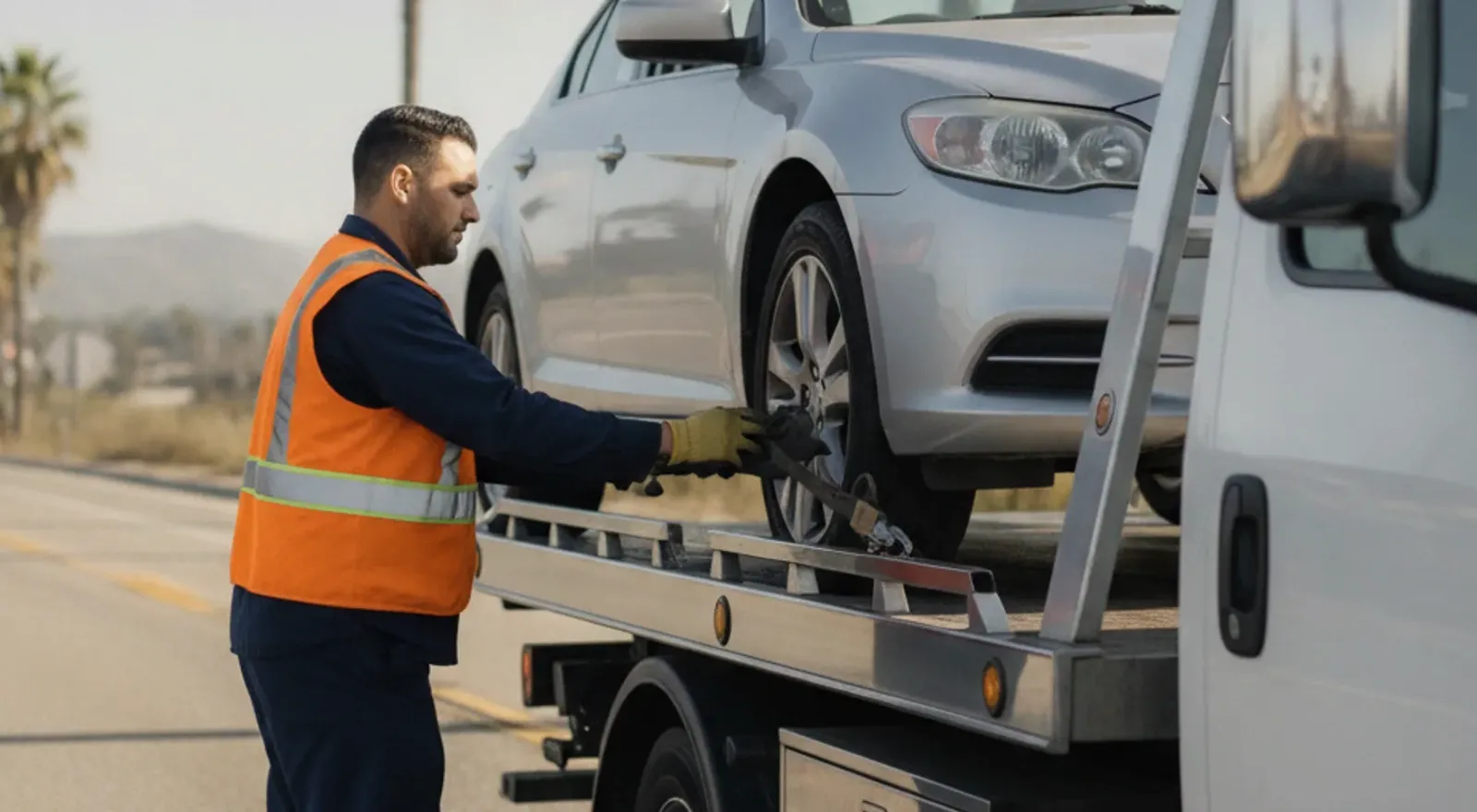
Separate expired registration from other tow reasons
Start with the reason recorded for the tow. Don’t assume the plate sticker tells the whole story.
California Vehicle Code 22651(o) allows police to tow a vehicle from a public road when its registration has been expired for more than six months. The San Diego Police Department also lists registration expired beyond six months among its common impound reasons.
A vehicle can have several issues at once. It might be blocking a driveway, parked where signs prohibit parking, or subject to another hold. The recorded tow reason may differ from what you first noticed.
Location also matters. A police tow from a public street isn’t the same as a private-property removal. California’s private-property towing law provides several alternative grounds for removal. These include compliant entrance signs, a parking-violation notice issued at least 96 hours earlier, and certain other property conditions.
Expired registration isn’t one of the limited grounds that lets a property owner rely on general authorization without approving each tow. That limited list covers vehicles within 15 feet of a fire hydrant, in a fire lane, or blocking an entrance or exit.
Still, a property owner may have another valid basis for removing an unauthorized vehicle. Review the signs, paperwork, location, and stated reason separately. Our guide to private-property towing explains how that process differs from a police impound.
Identify who ordered the tow
The fastest way to understand an expired registration impound is to identify the authorizing party. Look for the agency, property representative, creditor, or other party named in the paperwork.
A public-road tow usually involves a law enforcement agency. Within the City of San Diego, AutoReturn is the city’s official towing and impound contractor. Its vehicle locator can help drivers search for vehicles handled through that system.
Don’t assume that process covers every part of San Diego County. A vehicle removed in Oceanside, Chula Vista, El Cajon, or an unincorporated area may involve a different agency and storage facility. Port District tidelands also have their own Harbor Police process across San Diego, Chula Vista, National City, Coronado, and Imperial Beach.
A private parking lot creates a different question. Determine whether the property owner authorized the removal and which posted rule allegedly applied. California law treats compliant signs, advance parking notices, and certain property conditions as separate grounds.
A lender recovery is different again. It involves secured collateral after default, not an ordinary expired-tags impound. Our article about whether a repossession agent can enter private property explains that narrower situation.
Write down the authorizing party exactly as listed. Then contact that party or the storage yard using independently confirmed contact information. Ask for the recorded tow reason, removal location, tow date, and any agency release requirement. Don’t rely on an unfamiliar caller or text message asking for immediate payment.
Check the notice and vehicle records
Gather every record connected with the vehicle before making assumptions. Useful items include the mailed notice, citation, tow paperwork, registration documents, and any renewal confirmation you already have.
Compare the vehicle identification number, plate, removal location, and dates. A sticker that looks expired doesn’t answer every registration question. The California DMV is the right authority for confirming the vehicle’s current registration record.
If you renewed before the tow, ask the DMV how that renewal appears in its system. If the sticker or registration card was missing, explain that separately. Don’t assume a receipt, replacement request, or pending transaction automatically clears an impound. The impounding agency decides what records it accepts for its release process.
For a private-property tow, photograph the parking space, entrances, and posted signs if you can do so lawfully. California’s sign requirements include placement at all entrances, minimum dimensions, and specified towing information. The tow company must also notify law enforcement within the statutory period after removal.
If the tow appears unrelated to expired registration, preserve that evidence too. A driveway obstruction, parking restriction, repossession, or police hold may explain the removal. “Expired tags” might be only one visible issue.
Don’t ignore mailed notices while checking the facts. If a vehicle remains unclaimed, a lien-sale process may eventually apply. The timelines depend on the vehicle and procedure. Read more about what happens when a car isn’t picked up from a California tow yard.
Confirm the current release requirements
Call the impounding agency and storage yard before traveling across the county. Ask each one what must happen before release.
The exact requirements for an expired registration impound couldn’t be confirmed as one statewide checklist. They can depend on the recorded tow ground, agency instructions, registration status, ownership records, and other holds. The agency and yard should confirm the current steps for that specific vehicle.
Ask focused questions:
- What exact legal or administrative reason appears on the tow record?
- Does the vehicle require an agency release?
- What current documents will the agency and yard accept?
- Is another hold preventing release?
- Where and when can the required steps be completed?
- What charges have been itemized by the storage facility?
Request an itemized invoice before payment. California law gives vehicle owners rights involving invoices, vehicle inspection, and access to personal property during normal business hours. Exceptions can apply, including for repossessed vehicles.
For a City of San Diego police impound, a registered or legal owner may request a post-storage hearing. The request must be made within 10 days of the mailed notice. The hearing must then occur within 48 hours of the request, excluding weekends and holidays.
A hearing examines the validity of the storage. It doesn’t replace the need to confirm immediate release steps. If the vehicle is needed for work, medical care, or family transportation, tell the agency that timing matters. Don’t let urgency push you into guessing which documents will work.
Where to verify the California rule
Use the source that controls each part of the problem. California law answers whether a police tow is authorized. The DMV confirms registration records. The impounding agency identifies why this vehicle was removed. The storage yard explains its current release process.
For the public-road rule, review California Vehicle Code 22651(o). The approved legal point is narrow: police may tow when registration has been expired for more than six months. Don’t expand that into a claim about every parking lot, every expired sticker, or every California tow.
For a private lot, review Vehicle Code 22658 and the posted parking conditions. Expired registration alone isn’t on the statute’s limited general-authorization list. Another private-property ground may still apply.
If you’re wondering whether AAA will tow a car with expired tags, no universal answer was confirmed for this page. AAA provides members up to four roadside service calls per membership year, but service eligibility and towing conditions should be confirmed directly with AAA for the vehicle and location involved.
Don’t apply rules from another state. Search results about Indiana, Tennessee, or another jurisdiction don’t establish California law. Even within San Diego County, the correct release contact can change with the location and authorizing agency.
When the paperwork conflicts with the agency’s explanation, ask for the reason in writing. For a disputed tow, missed deadline, ownership conflict, or threatened lien sale, consider qualified California legal counsel. Tow Pro SD can connect drivers with local towing operators, but we don’t decide impound validity or release police-held vehicles.
When to call us
Call when a released vehicle needs professional transport, or when a disabled vehicle can’t be moved safely. Tow Pro SD connects callers with independent licensed and insured operators serving every city in San Diego County. Call (858) 925-5546 to reach dispatch.