Is a tow truck allowed to turn down my car in California?
Sometimes, yes. California law and a tow operator’s own policy allow refusal in certain cases. Here’s when, plus your San Diego rights.
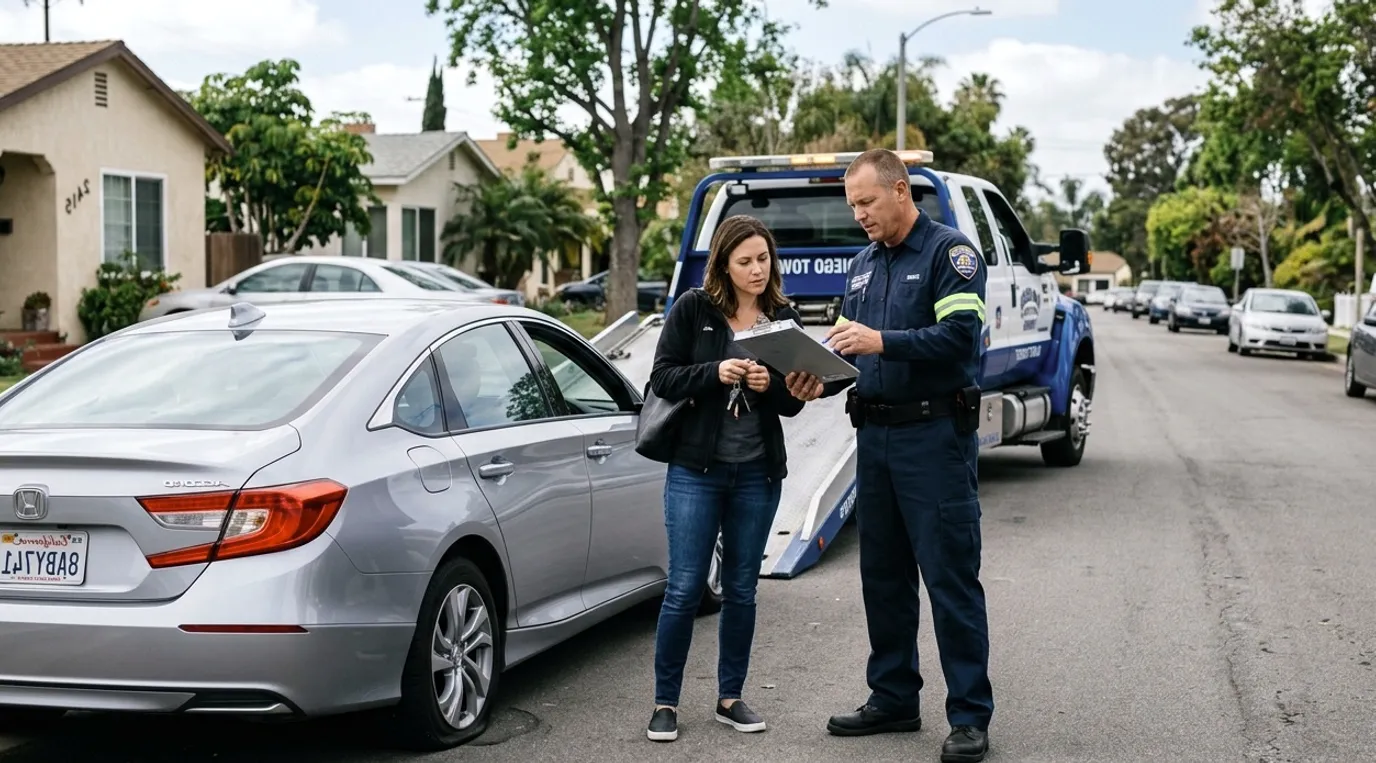
What you'll learn
- 5 times a CA tow operator can lawfully turn down a job
- Jobs an operator MUST take: CHP rotation, police dispatch
- A plain look at the wording in the California Tow Truck Industry Coalition’s guidance
- What owners can do when service is refused
- What to do next if no one will take your call
Step by step
- Reason 1: the vehicle is heavier or larger than the truck is rated to handle, such as an RV facing a wheel-lift truck.
- Reason 2: towing the vehicle would be unsafe because of a hazardous fluid leak, fire risk or structural collapse.
- Reason 3: the driver can’t prove ownership, whether there’s no registration or the vehicle may be stolen.
- Reason 4: the spot itself is dangerous for the operator, like a hostile situation underway or nowhere safe to pull off.
- Reason 5: the operator doesn’t cover that area or vehicle type, for instance an operator without an EV rating declining an EV.
- They have to take the job on CHP-rotation calls, at police-directed scenes, and when your AAA or insurer sent that very operator to you.
Turned down by a tow operator while stranded somewhere unsafe? Dial #399 from a cell phone to reach CHP for a non-emergency, or 911 in an emergency. CHP can send a rotation-list operator, and those operators are bound by contract to respond.
Quick answer
Sometimes, yes. A California tow operator can decline your vehicle, but only in narrow cases that come from state law, CHP rotation contracts, or the operator’s own policy. Not feeling like driving out, thinking the pay is too low, or favoring someone else in line don’t count. When a refusal doesn’t match any of the valid reasons below, you’ve got options.
5 valid grounds for a CA operator to decline
- The vehicle is heavier than the truck is rated for. A light-duty wheel-lift truck can’t lawfully pull a 26,000-pound box truck. Either the operator sends suitable equipment, or they decline and point you to a heavy-duty operator. Under CVC 27907, the equipment has to be "equipped to safely move the vehicle being towed."
- The vehicle itself is dangerous. A live fluid leak (gasoline, brake fluid, hydraulic), a collapsed structure, a fire risk, or hazardous cargo all qualify. No one can require an operator to take on a vehicle that endangers the operator, other drivers, or property.
- Ownership can’t be confirmed. Without a driver license, registration, or other proof that you’re authorized to move the vehicle, the operator may say no. That matters most for vehicles flagged as stolen and for moves made without the owner’s consent.
- The scene isn’t safe for the operator. Think hostile surroundings, nowhere safe to pull off, an unstable hillside, or a construction zone the operator can’t reach. The operator may decline until the spot is made safe, for example by a police escort or scene clearance.
- The vehicle type or area is outside what the operator covers. An operator without EV training can fairly turn down a Tesla. One who works only the coast can pass on a backcountry call. One with no flatbed can decline an AWD vehicle. In every case they must say so, which lets you phone someone else.
Jobs an operator is required to accept
- CHP rotation calls. Any operator under contract on the CHP rotation list in San Diego County has to respond to scenes that CHP dispatches them to. Turning one down can get them dropped from the rotation, a serious hit to their business. See the terms of the CHP Tow Service Agreement (TSA).
- Scenes directed by police. Officers from SDPD, SDSO, or another law enforcement agency on scene can assign a particular rotation-contracted operator to a particular incident. Saying no would cost that operator their rotation slot.
- Dispatch from your insurer or motor club. Suppose AAA, Geico, Allstate, USAA, or another insurer or motor club sent the operator to you after you called them. That operator answers to the motor club by contract, not only to you, and refusing brings contract penalties.
- A standing agreement with your property. An operator under contract with an HOA, apartment complex, or commercial property must handle property-management calls the way that contract requires.
California Vehicle Code sections worth knowing
CVC §22651: when law enforcement can order a tow
This section lists 30+ situations where a peace officer can have your vehicle towed without your say-so: parking in a fire lane, blocking a driveway, registration expired by more than 6 months, abandonment, evidence in a crime, an arrested driver, and more. A tow under §22651 is legally authorized, so the operator is required to accept it.
CVC §22658: towing from private property
This one covers tows from private lots such as apartment parking, retail centers, and HOA streets. The property owner has to post particular signage, the operator has to confirm the violation, and the vehicle owner gets post-storage hearing rights. Say a property calls an operator under §22658 and the violation is already cleared by the time the operator gets there: the operator can decline the tow with no penalty.
CVC §22651.07: drop fees and release before the tow
Reach your vehicle before the operator finishes hooking up and begins moving it, and you can demand it back. The operator may charge a drop fee, typically capped at 50% of the tow fee, but release is mandatory. Refusing to release a vehicle that isn’t fully hooked yet is a violation.
CVC §22852: post-storage hearing rights
From the date you’re notified of storage, you have 10 days to ask for a post-storage hearing. After your written or in-person request, the hearing must happen within 48 hours, and weekends and holidays don’t count toward that. There you can dispute whether the tow was authorized and whether the storage fees are reasonable.
CVC §13377: tow truck driver certification
Every California tow truck driver must finish a CHP-administered certification program and keep the certification on the truck. A driver who won’t show it when you ask is a red flag.
CVC §27907: tow truck equipment requirements
Tow trucks must carry the safety equipment, securing devices, and lighting needed to move a vehicle safely. If a wheel-lift truck shows up for a vehicle that needs a flatbed, the operator can’t legally tow it and has to decline and have the right truck sent.
Civil Code §3068: lien sales by tow operators
This law sets how operators can dispose of unclaimed vehicles. A vehicle valued under $4,000 can go to lien sale after 30 days in storage. Above $4,000, the timeline is 60 days, plus notice to the registered owner and the legal lienholder. If you’re working to get a vehicle out of storage, that’s the clock to watch.
What you’re entitled to as the owner
- Knowing where your vehicle is. When police ordered the tow, SDPD’s non-emergency line can tell you which storage facility got it.
- A written, itemized invoice. Before you pay, the operator must give you the charges in writing. That means hook fee, mileage, daily storage, gate fee, and after-hours fee, each listed. Decline anything that isn’t on the invoice.
- Getting your belongings without settling the tow bill. CVC 22651.07(g) lets you take personal items such as clothing, electronics, documents, and child seats out of a stored vehicle before you pay. Bring photo ID.
- A post-storage hearing. CVC 22852 gives you 10 days from notification to ask for one.
- Turning away an operator who has no certification to show. Under CVC 13377, it has to be available when you ask.
- Insisting on a flatbed for EVs, AWD, lowered, or damaged vehicles. CVC 27907 requires the operator to use safe equipment.
If an operator refuses you without good reason
- Write down the refusal. Record the operator’s name, MCP number, the truck’s license plate, the time, and the reason they gave.
- Phone a different operator right away. Don’t hold off. Call Tow Pro SD, which can match you with an independent operator, or ring another reputable operator.
- Stranded somewhere unsafe? Call CHP. From a cell phone, dial #399 for CHP’s non-emergency dispatch. They can send a rotation operator who’s contractually required to respond.
- If your motor club or insurer sent the operator who refused, call them back. They’re obligated to send someone, and the refusing operator broke their contract with the motor club.
- Send a complaint to the CHP Carrier Services Section. CHP regulates tow operators in California, and repeated wrongful refusals can justify an investigation and removal from the rotation.
- For a property tow dispute (CVC 22658), ask for a post-storage hearing within 10 days. The hearing officer decides whether the tow was authorized and whether the fees were reasonable.
Patterns we notice around San Diego
- Predatory CVC 22658 tows. Some property-tow operators in San Diego have faced investigation for predatory enforcement: towing legally parked vehicles, faking signage compliance, charging excessive drop fees. NBC San Diego reported on complaints about Western Towing in 2024. Was your vehicle towed from a property that lacks CVC 22658-compliant signage at every entrance and inside the lot? Then you have grounds to contest the tow at a hearing.
- Cross-border vehicle tows. Near the border, operators now and then decline vehicles registered in Mexico or Baja, pointing to insurance or registration problems. They have to state the reason clearly, and you’re free to dispute it and call someone else.
- Heavy-duty refusal cascades. Picture a box truck or RV broken down on I-8. A wheel-lift operator arrives and then declines. That’s the right call, since they shouldn’t tow what they can’t handle. They must refer you to a heavy-duty operator or call CHP to send one. Leaving without doing either is a violation.
- EV refusals. When an EV breaks down and a wheel-lift-only operator says no, that’s correct, because an EV shouldn’t go on a wheel-lift. They’re required to refer you to a flatbed operator. The Tow Pro SD line takes these calls when other operators decline them and matches callers with an independent flatbed operator.
Times Tow Pro SD has declined a call, and why
We’ve said no in four kinds of situations. First, a vehicle with a live gasoline leak that other operators at the scene were already dealing with. Second, a location inside an active police perimeter where we couldn’t get clearance. Third, a caller with no ID or registration for a vehicle SDPD had flagged as a possible recovered stolen. Fourth, a vehicle heavier than the first truck’s rating, so a heavy-duty operator got the job instead. We document each refusal, and the customer hears a clear explanation and gets a referral.
Who to contact with a complaint
- CHP Carrier Services Section: regulates CA tow operators. The online complaint form is at chp.ca.gov.
- CA Bureau of Automotive Repair (BAR): for tow operators who also perform mechanical repair.
- SDPD Tow Administration: for tows that SDPD ordered.
- San Diego County District Attorney, Consumer Protection: for a single operator’s repeated predatory behavior.
- California Public Utilities Commission (CPUC): only for heavy-duty interstate operators.
Rather have a pro handle it?
Need a tow or roadside help anywhere in San Diego County? Call any hour of the day or night, and someone will pick up.
Keep learning.
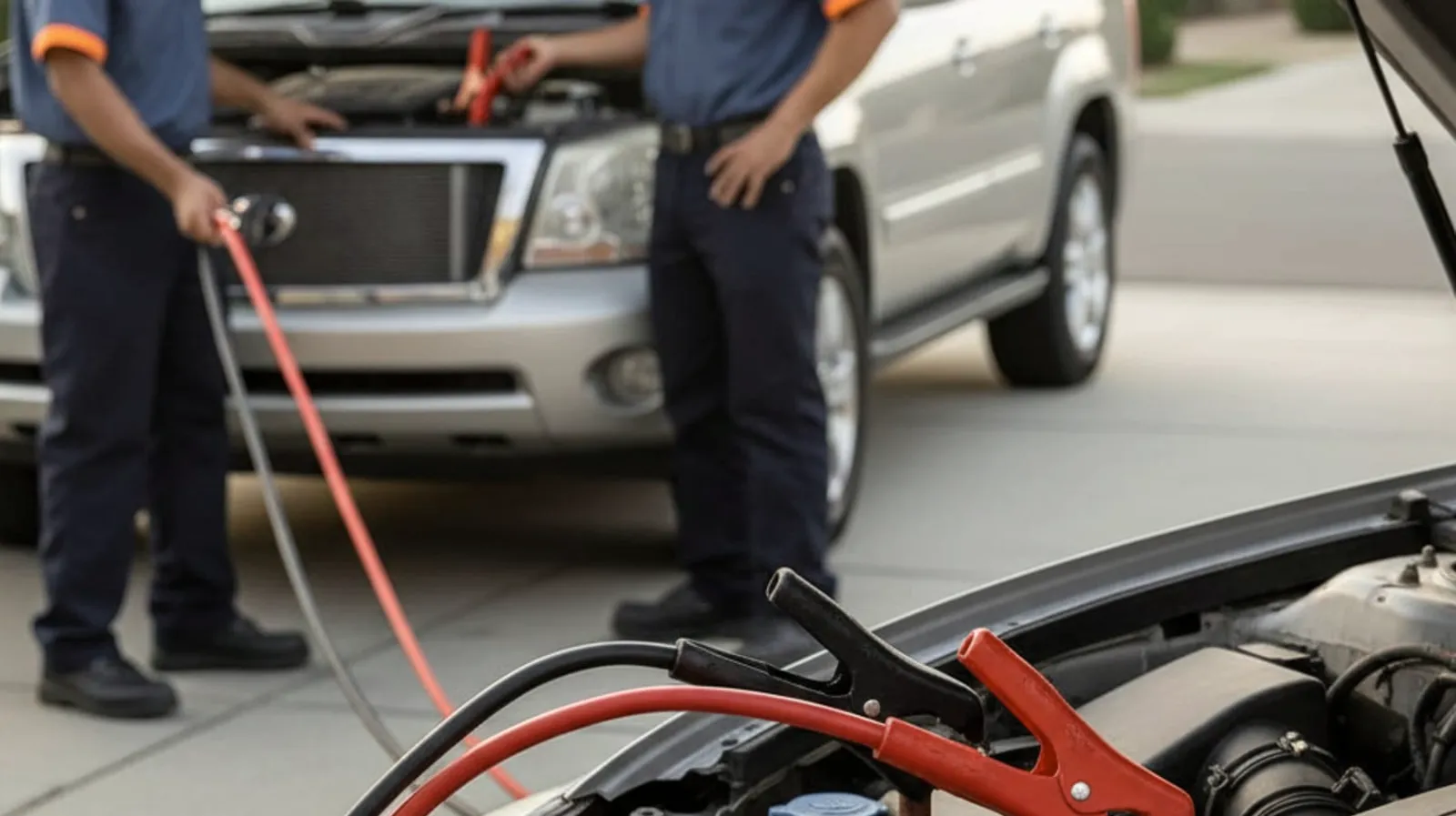
Jump-start a dead battery safely
Jumper cables seem easy until they’re connected the wrong way. Get it right and you skip the sparks, the fried electronics, and a tow you never needed.
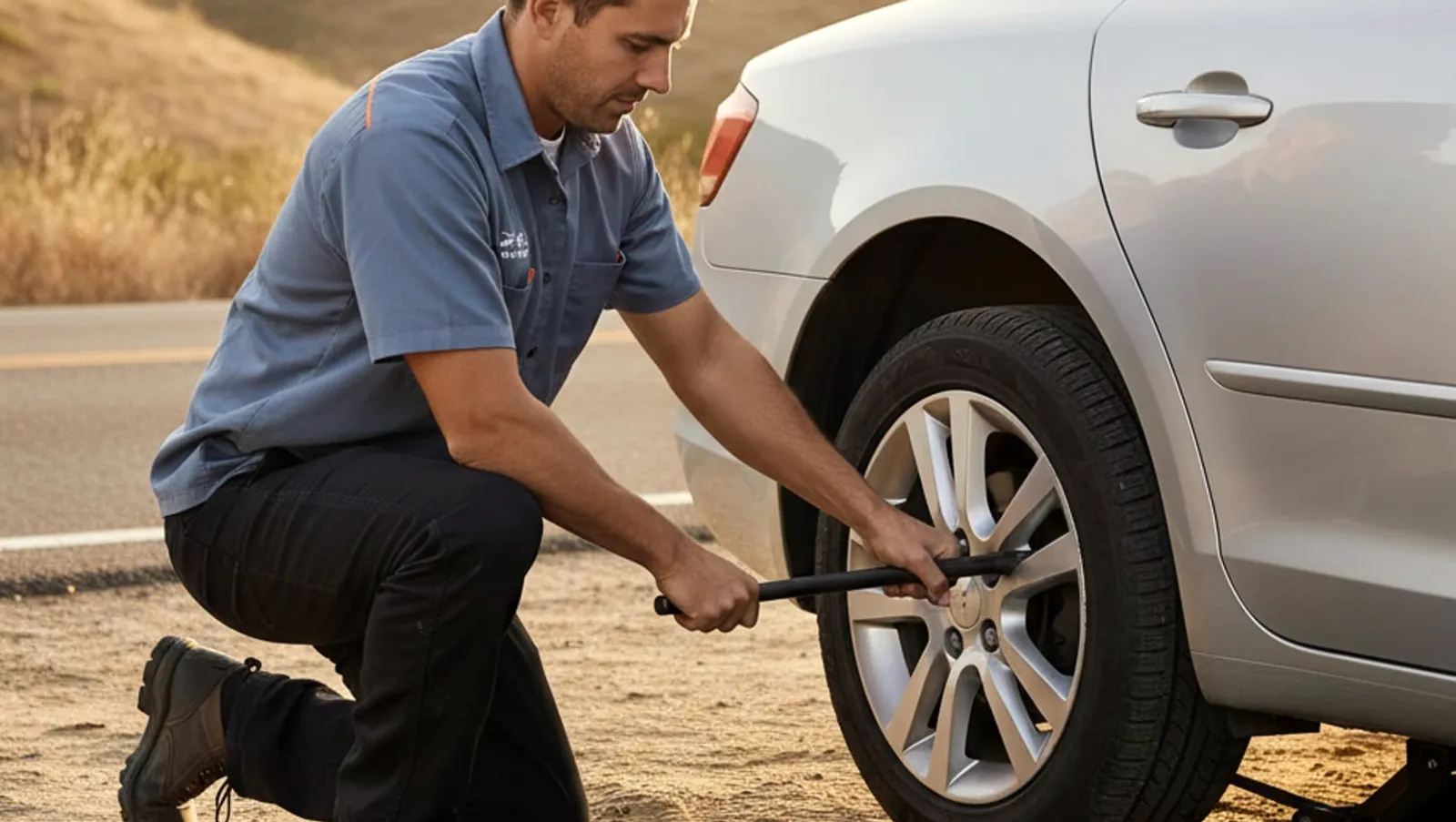
How to change a flat tire
Start by checking that your spot is safe, firm and level. If it isn’t, keep your seatbelt on unless you see fire or smoke, and call for help.
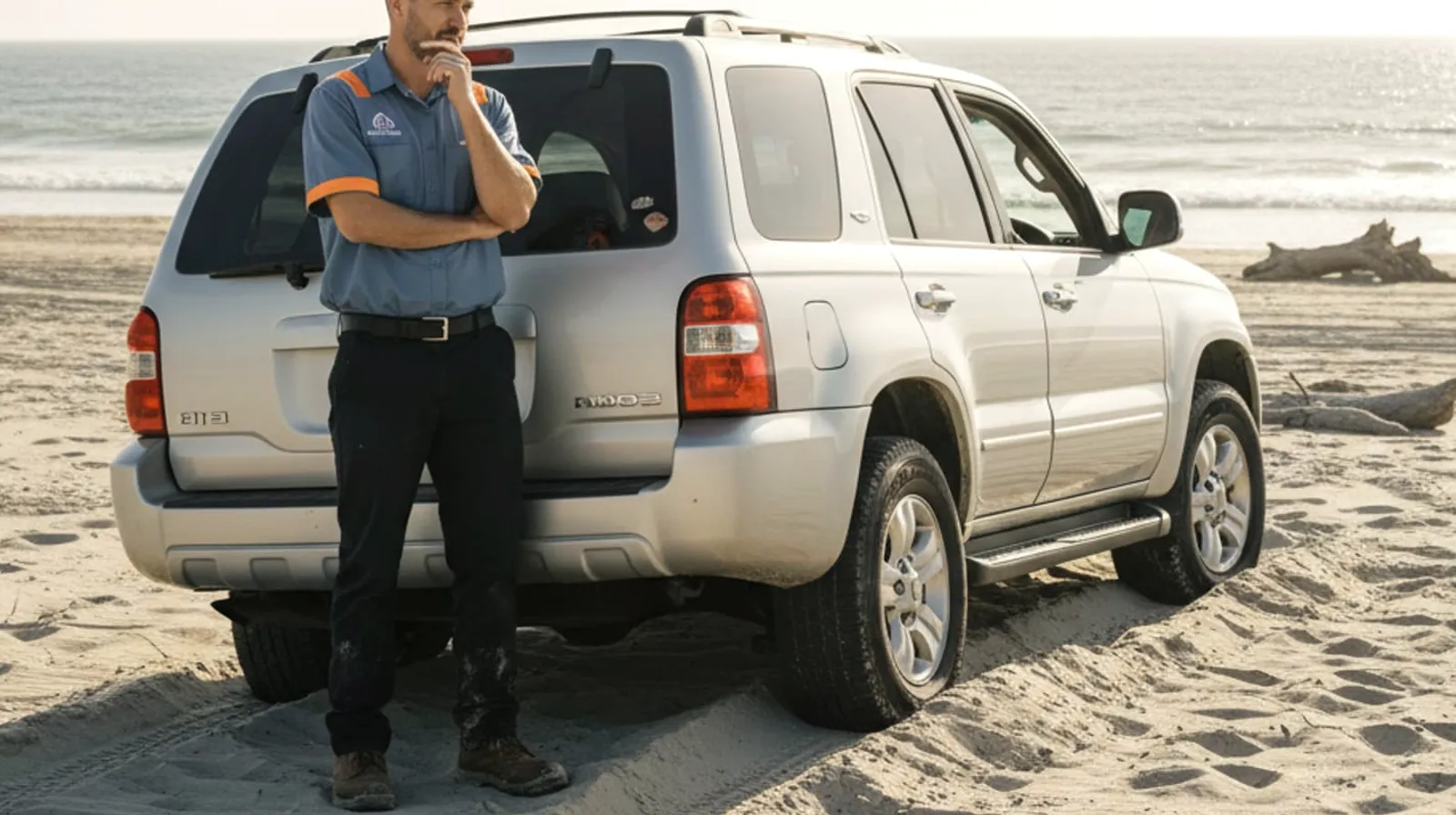
What to do when stuck in sand or mud
Ocean Beach, Fiesta Island, and the Carrizo Badlands swallow vehicles every week. Your first job is to keep the situation from getting worse.